My Ship Isn't Pretty
Well. It's been a time. Since I last posted, I have largely left academia in the professional sense. It was time, as I spelled out in my last post; and though I do miss working at the university, I don't really miss working at the university. I'd somehow had 23 years as a lecturer and teacher- something that astonishes me when one considers I only recently turned 18. What? Don't look at me like that.
I (like many I have encountered in the profession) had never really planned on it as a career, and though it has been enormously fulfilling I had grown tired of talking about the work more than doing it. In the months since leaving, I find my mental and physical fatigue has receded (despite Tottenham Hotspur's best efforts to finally kill me off) and the combination of physical work and simplicity of demand has helped me sleep far more effectively and wake without the habitual feeling of impending doom. I also find I am rather in demand for work, which is encouraging.
Progress with the work boat has taken off after a stuttering time, and the uptick in both mental and physical capacity is beginning to reap real rewards.
The story there is a little dramatic in the experiencing if not the telling. Last year the back end of the boat took a swipe from a holiday boat, bending the rudder. As I was passing Tooley's Boatyard in Banbury in March, I called in to see if they could straighten it out, and as it was coming out of the water I threw caution to the wind and had a fresh hull survey done- a whole year before it was due. Imagine my surprise then, when the survey showed that a two and a half metre section of the baseplate and the uxter plate (the horizontal 'shelf' in the underside of the back deck which forms the swim for propeller and rudder to sit) had become so dangerously thin that I was advised not to move the boat for fear of knocking the delicate plate and sinking the whole venture. These sections of the hull were so thin that the surveyor could not actually get a thickness reading on their digital gauge. 'Don't bloody hit anything' was the wry message from him.
I made an immediate booking for dry dock repairs, and set about scrabbling to raise the dosh to cover the five-figure quote for the work.
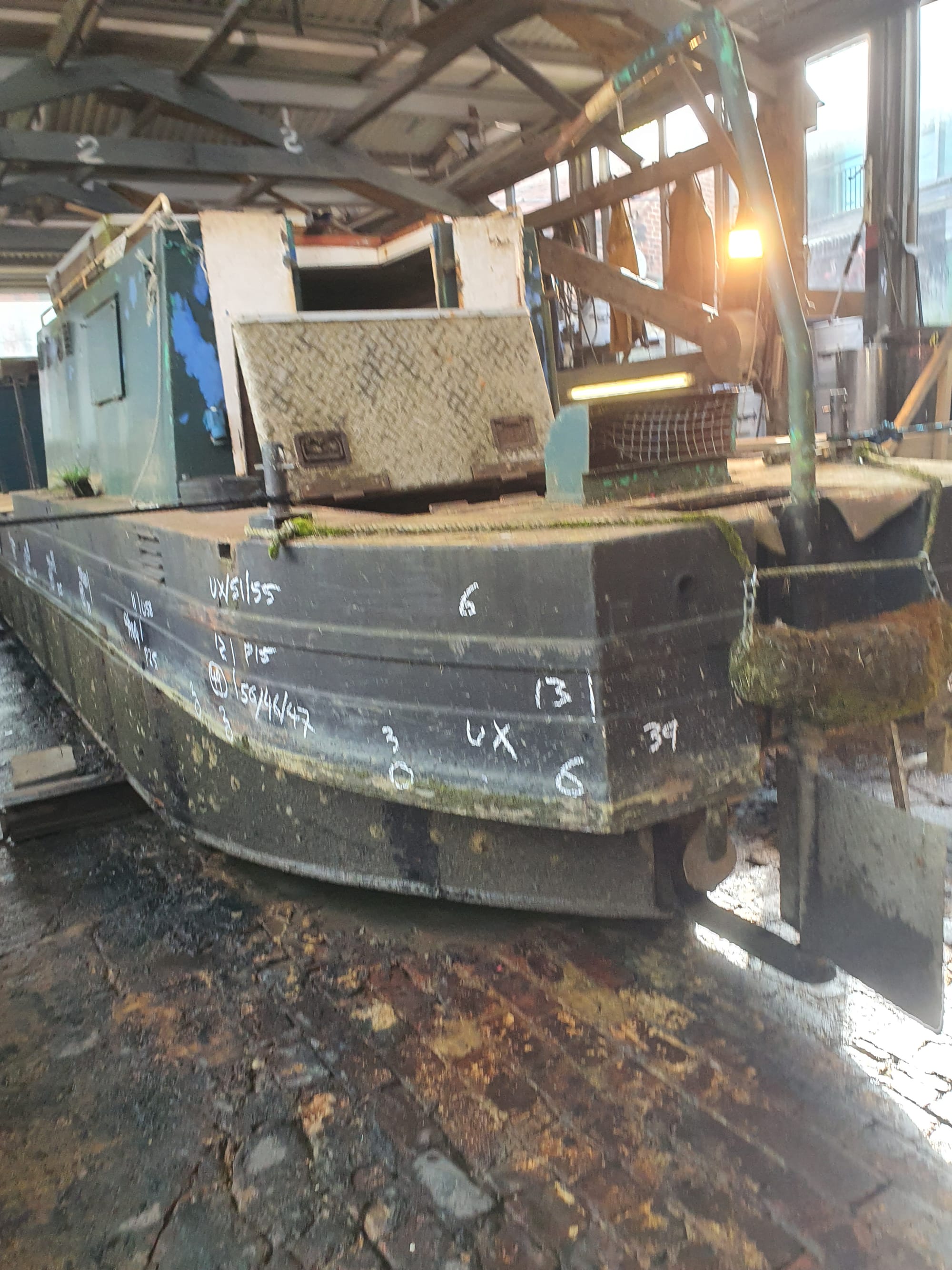
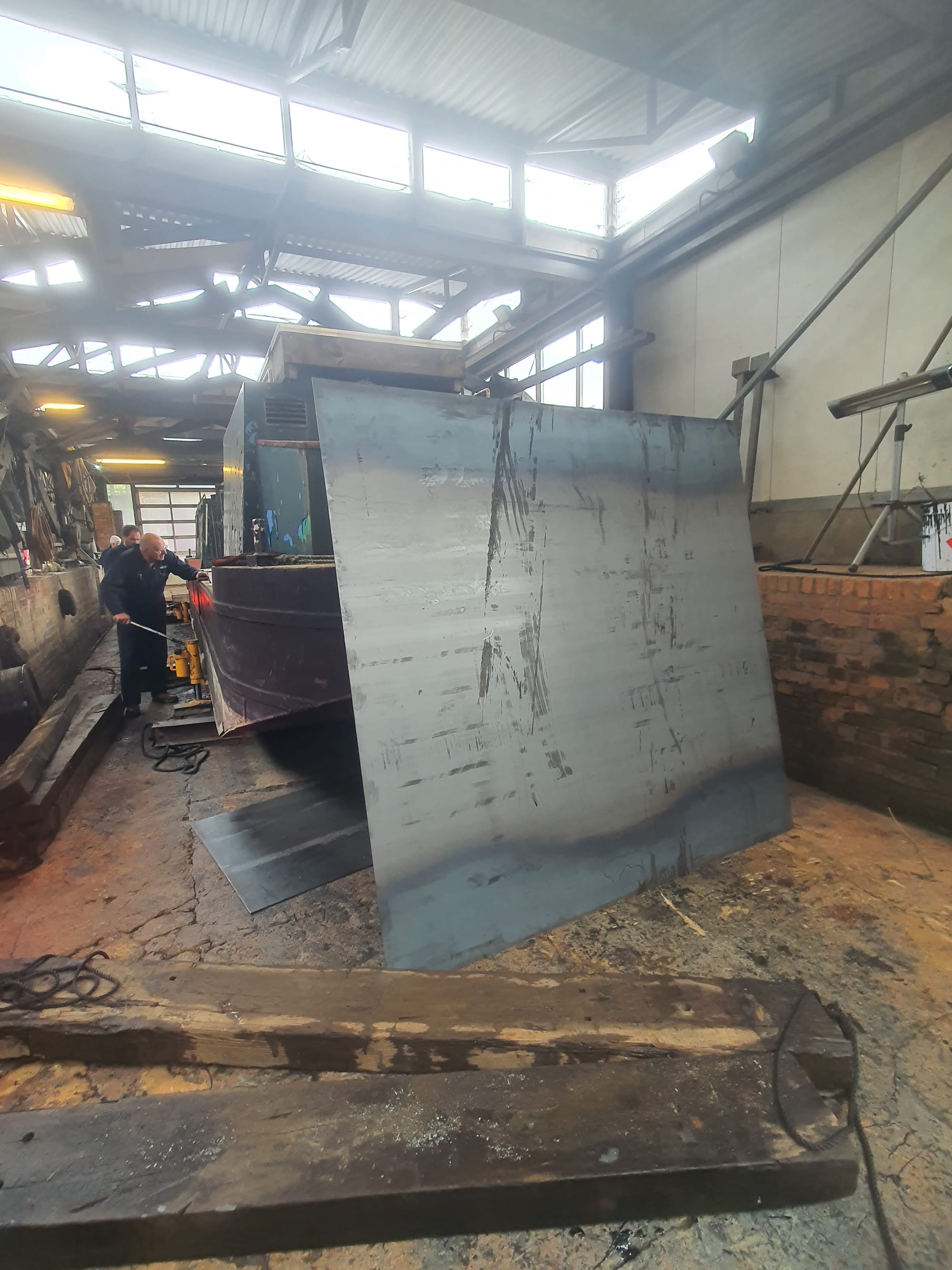
After a nervy wait of seven weeks, Murphy's Game slid into dock and was raised on jacks whilst a truck load of steel pulled alongside with the material needed for a long and much happier life on the water (as opposed to underwater of course).
Nearly 15 days were spent in dock, and we burned through the money we had sorting all the problems we found. But sort them we did.
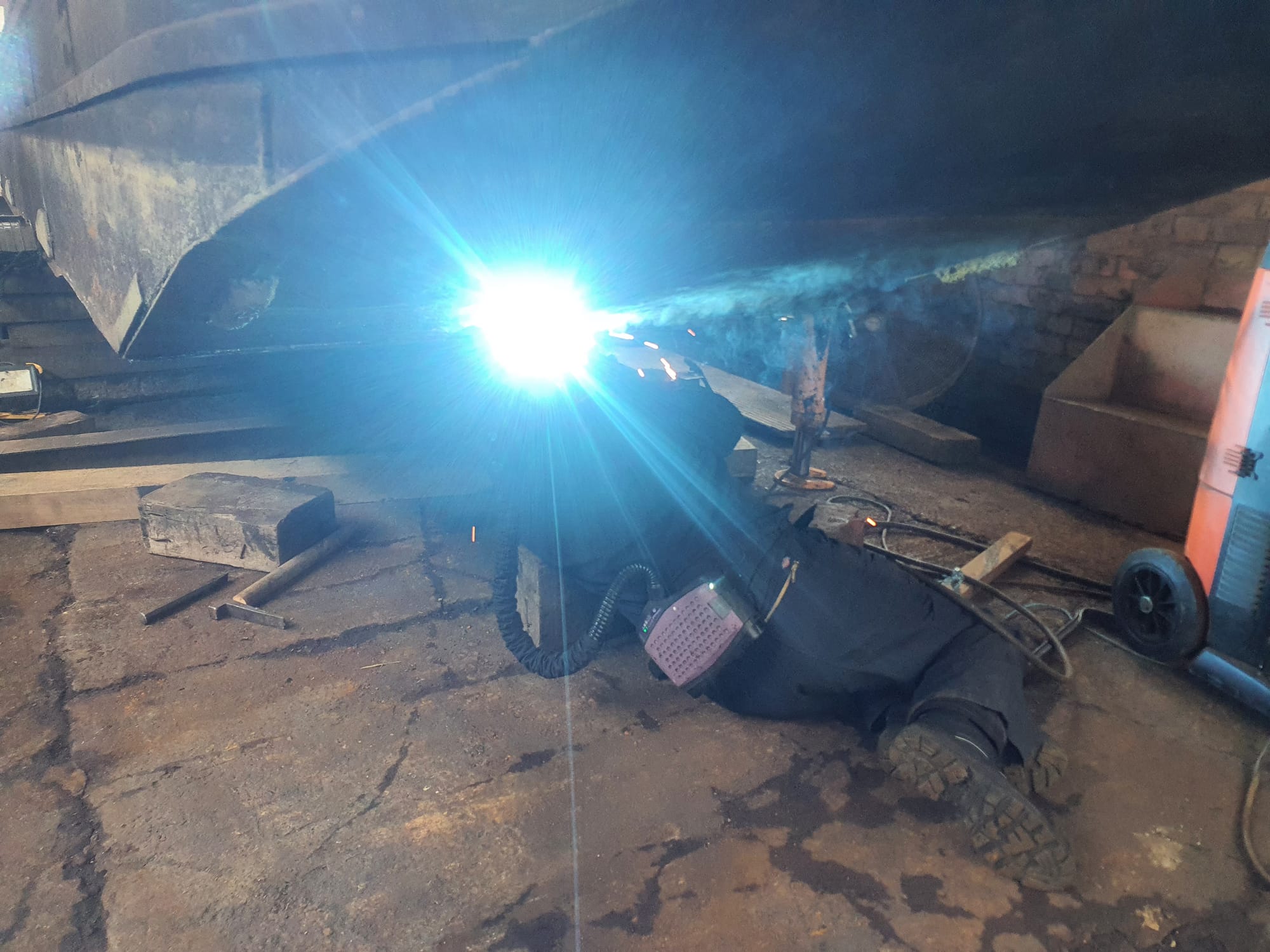
A heatwave ensued whilst we were welding, fettling, cleaning, and making good; meaning the work was draining as well as dirty, but with four of us at the work, progress was both constant and encouraging. The base was made good, and almost 100 small 'pits' of decay were plugged with weld along the side of the boat before I ground them back flat. A small service was held for my trusty angle grinder, which gave its all but finally died at the end of that job. We had some good years together buddy, now go with god. Together, all of the major plating was done, plus an entirely rebuilt weedhatch and anti-cavitation plate and finally the job that brought me here to begin with- a brand new, straight, rudder.
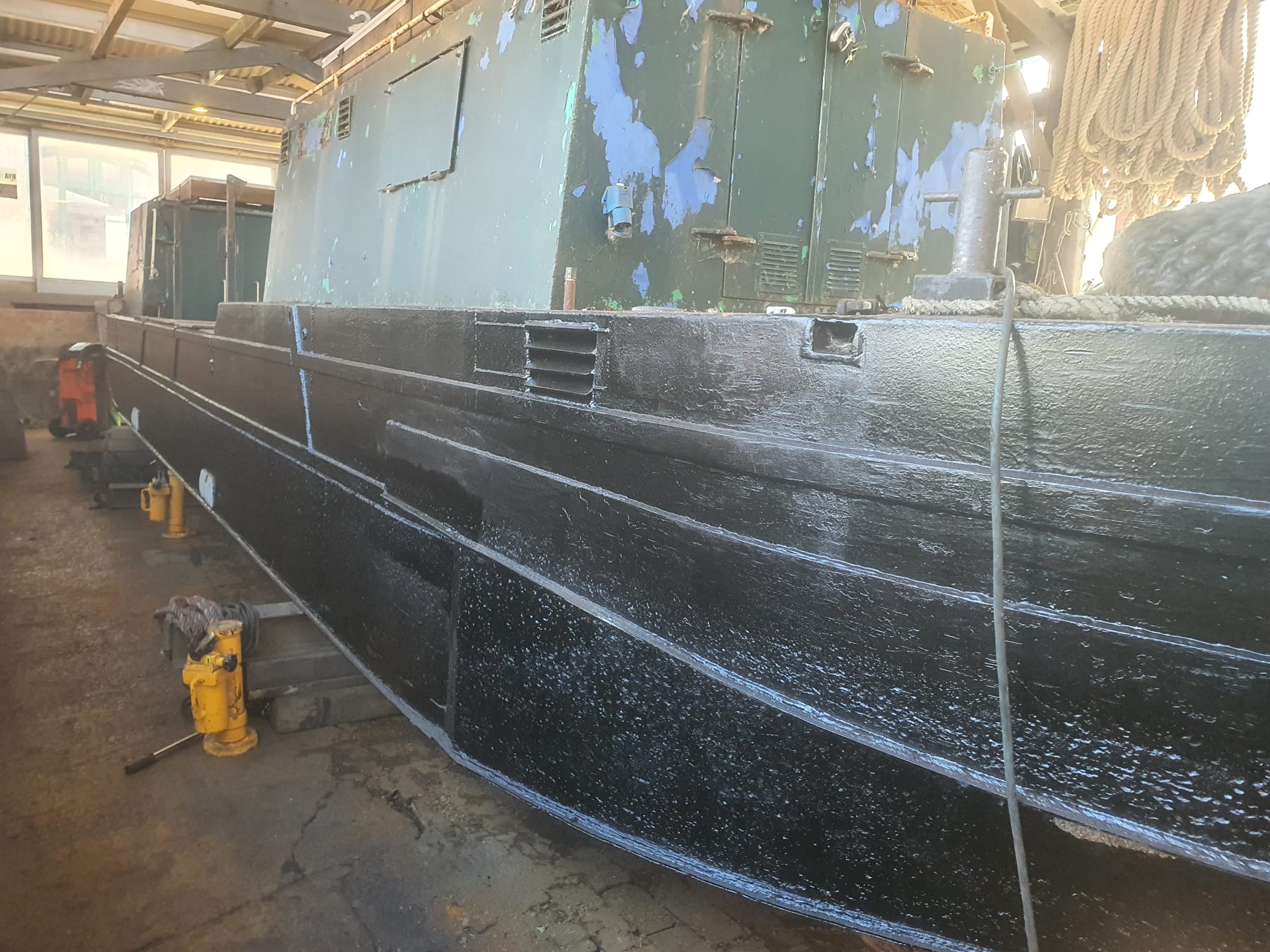
In such heat as we were working, the coats of bituminous blacking dried within a couple of hours of being applied, as opposed to overnight. The extra time I gained allowed me to set about some other niggling jobs such as welding on new hinges for the back deck, proper fender rope loops front and back, and mending seized door locks. Of all the massive achievements of the time out of the water, I am most pleased with the deck hinges, of course. Obviously a boat that floats is good, but that deck had been trying to have my fingers off for three years with the sort of vindictiveness that Marchant the Wonder Bike could only dream of.
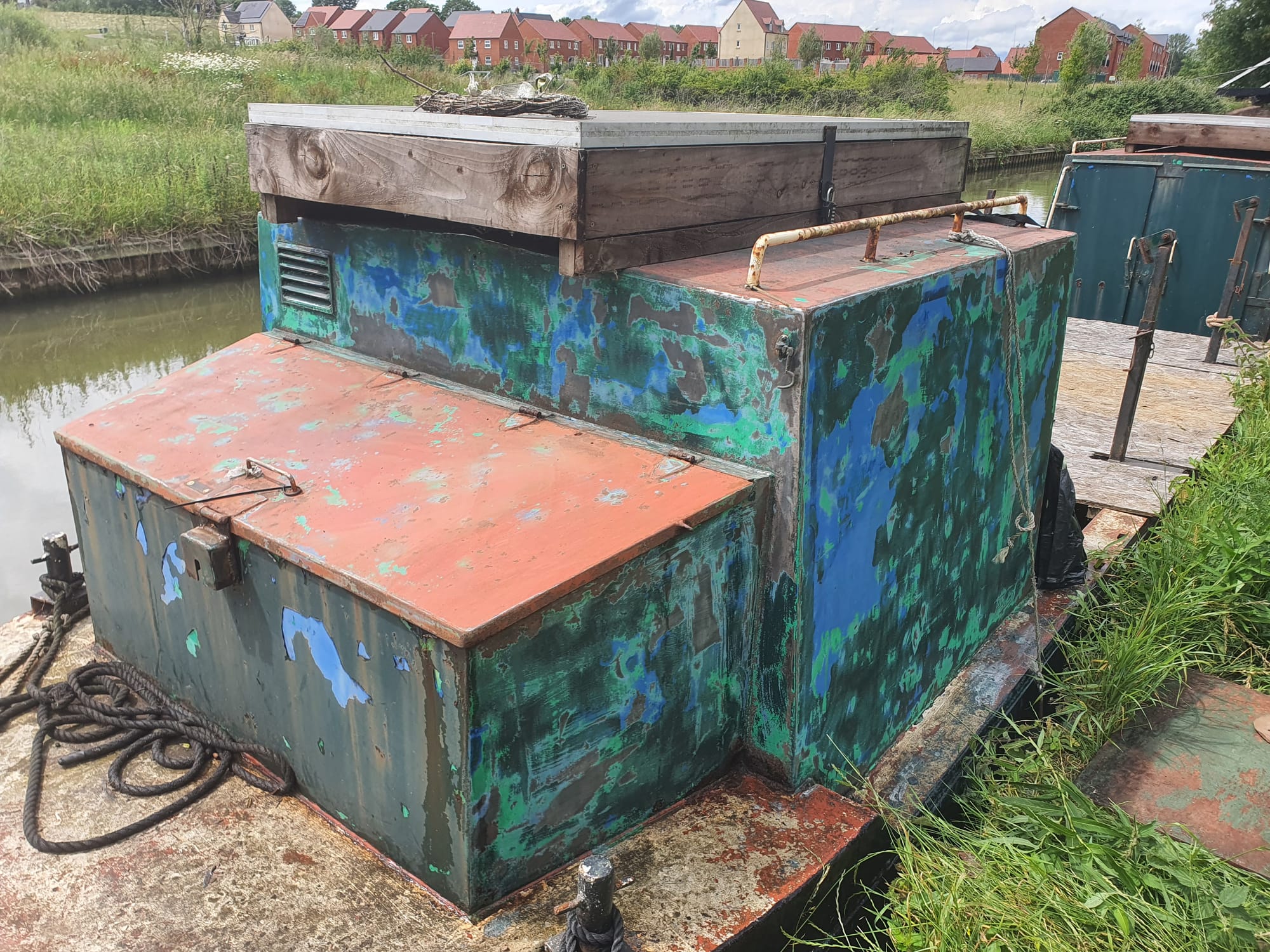
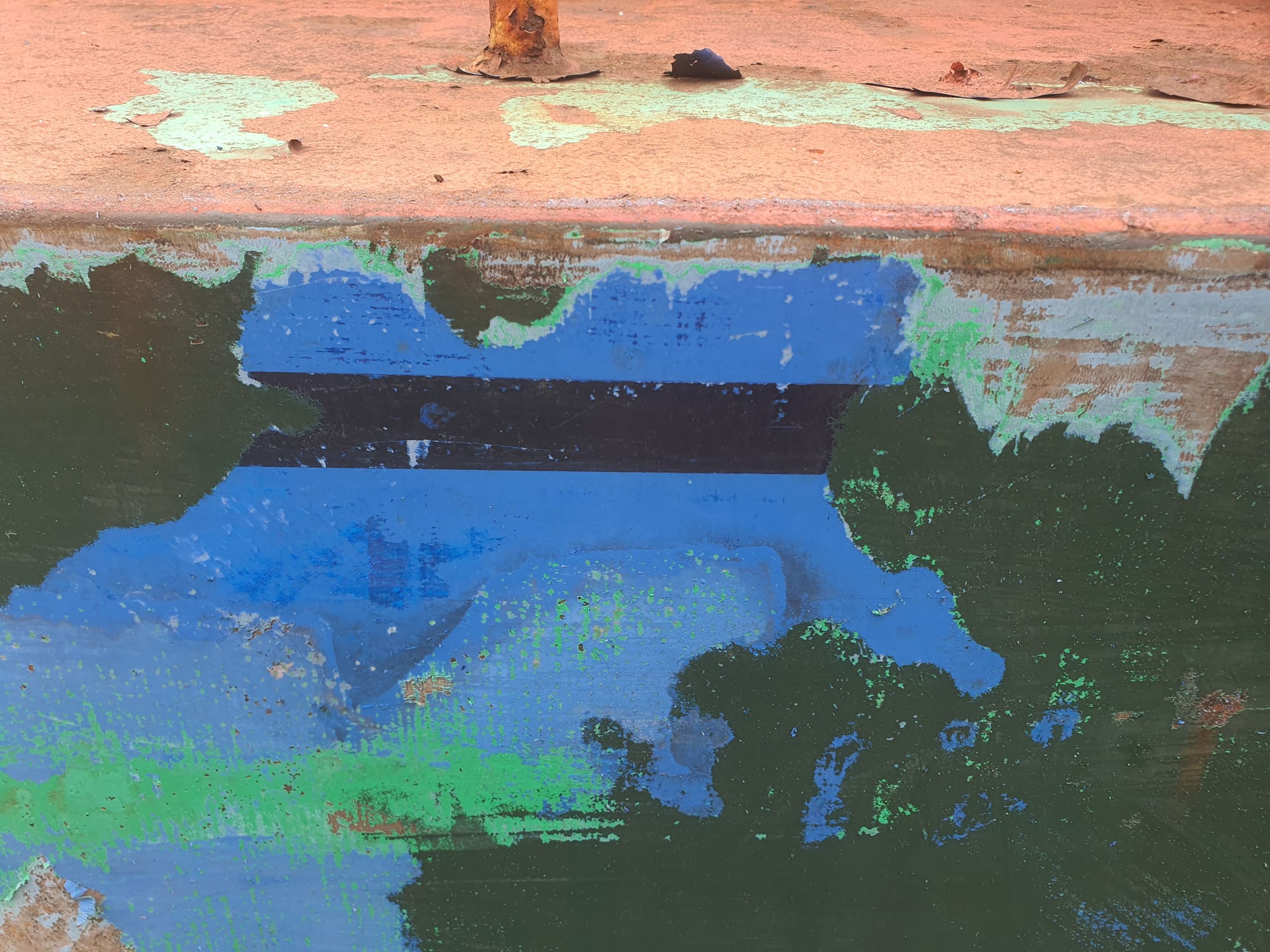
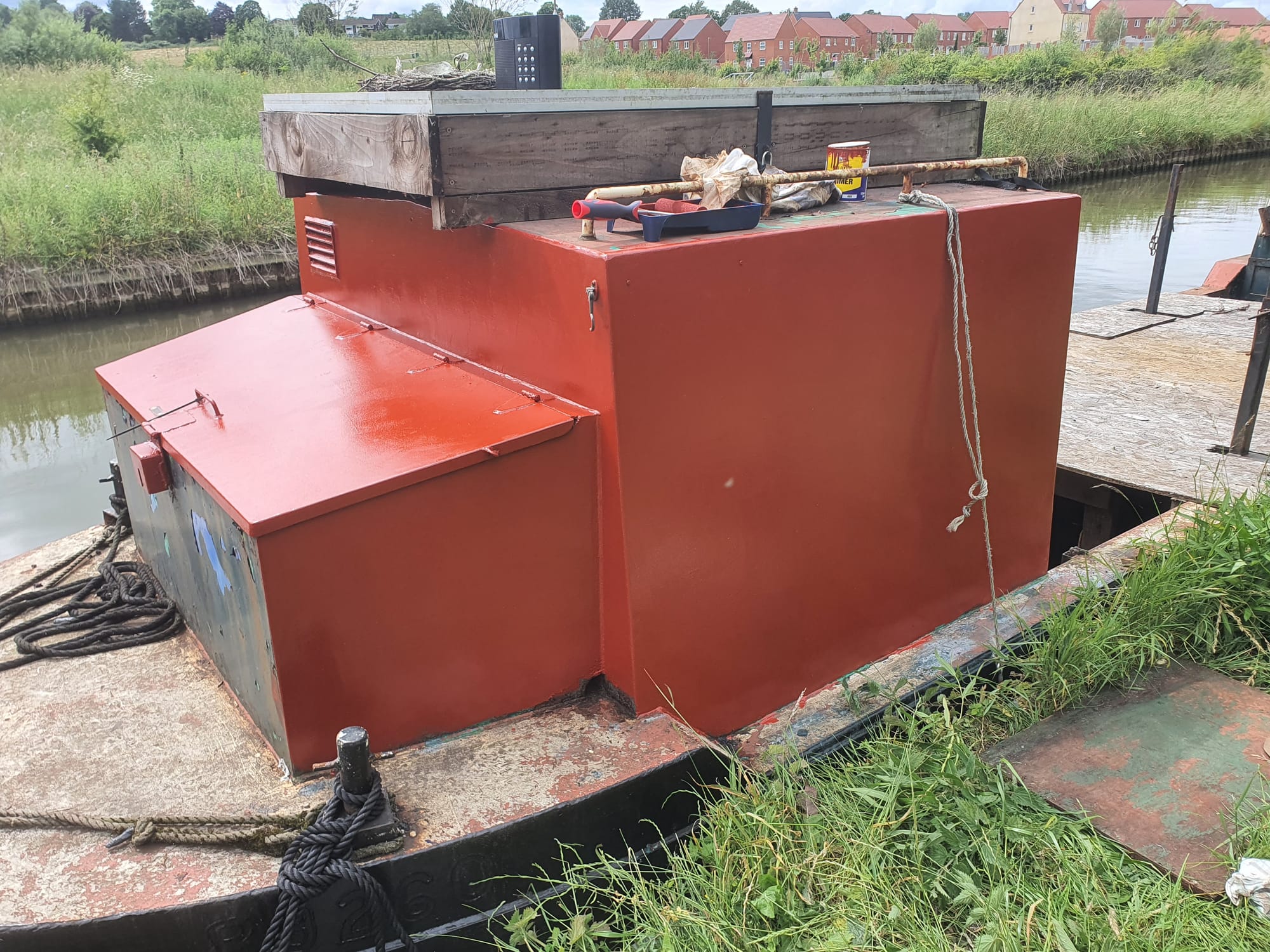
It's already been nearly a month since we came back out into the water, and work continues on a daily basis, although I am back at work during the day trying to plug the hole in my bank balance from having all the time off. With a shiny bottom, the poor state of the boat's top is shown in greater contrast, and so I have finally set about painting the cabins. Sanding has shown a total of seven previous liveries (six by the British Waterways Board and one by Uplands Marina), of which I have chosen to recreate the earliest- an almost sky blue with navy detailing- for the finished colour. While the weather holds, I will keep on, and soon it will all be set to install the long-long-long-awaited centre roof (of which more soon).
So that's it for now, much purely functional busy-ness and no little expense in the process. The long days are a time for doing, soon enough there will be time for reflection and more planning; for now in the words of yer man from that Tom Hanks film, "paint, don't tickle"